Protecting Property from Wildfire Risk: Extended Zone
Understanding Fire Ignition Zones
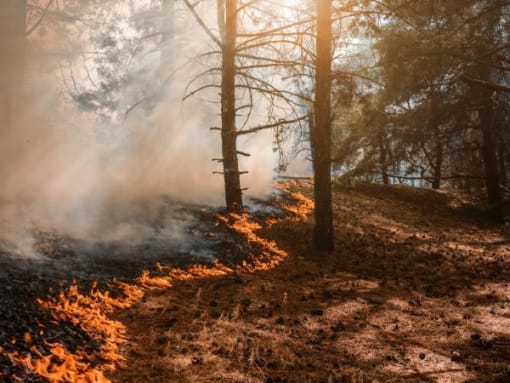
The area inside 30 metres from the exterior of your property is called the Property Ignition Zone. That zone is composed of three key areas: the Immediate Zone (0 to 1.5 metres), Intermediate Zone (1.5 to 10 metres), and the Extended Zone (10 to 30 metres). This series will illustrate how to reduce your property’s risk from wildfires by taking simple steps in each zone to prevent the spread of fire if it breaks out.
Extended Zone (10 m to 30 m)
This is the outer perimeter and the first line of defence for your property. The goal isn’t to extinguish the fire in this area, but to reduce the intensity of the blaze and decrease its rate of spread. Extending further than 30 metres will assist in better controlling and limiting the fire. There are several steps a property owner can take to be prepared for a wildland fire.
Managing Trees
While trees bring many eco-friendly advantages and provide natural beauty, they can fuel a wildland fire once it moves into the treetops. From there it can spread from tree to tree if they are close together. Therefore, it’s good practice to space trees three metres apart to reduce the possibility of a fire spreading. Remove smaller evergreens as they can give fire a step up to taller trees.
Pruning Trees
A surface fire will climb a tree fast. All branches and growth should be removed within two metres of the ground. It is recommended to prune all trees within 30 metres of your residence and ideally within 100 metres.
Smart Pruning
Pruning is best done in late winter when trees are dormant. Branches shouldn’t be cut too close to the trunk and never remove more than one-third of the tree’s canopy as it will damage the tree.
Trees to avoid
Coniferous trees (with cones and needles) are highly flammable and should not be situated within 10 meters of your home. These include:
- Spruce
- Fir
- Pine
- Cedar
Trees to plant
Deciduous trees (leafy) are resistant to wildland fire and include:
- Poplar
- Birch
- Aspen
- Cottonwood
- Maple
- Alder
- Ash
- Cherry
Roadways and Driveways
In an emergency, you and your family may need to leave your neighbourhood while emergency responders enter. For this to happen safely and efficiently, consider the following tips:
- Clearly mark your address
- Clear vegetation from access routes to and from your property. Remove trees and branches that would prevent access by emergency vehicles
- If you have a large property, make sure your driveway has a spot to turn around and, ideally, provide two access routes
Understanding Fire Ignition Zones
Extended Zone 10m – 30m
Reduce hazards by eliminating potential surface fuels (remove fallen branches, prune trees etc.)
Intermediate Zone 1.5m – 10m
A fire-resistant area, free from materials that could easily ignite.
Immediate Zone 0 – 1.5 m
A non-combustible aread up to 1.5 metres from the property.
Our team understands the risks faced by Strata and Condo Corporations
ABOUT THE BFL CANADA REALTY INSURANCE SERVICES TEAM
Our team of real estate specialists works collaboratively with you to develop a cohesive, sustainable, long term risk management plan. We are here to guide your annual insurance and risk management solutions to provide you with complete peace of mind.
CONTACT US
Our in-house claims team will track your claim from start to finish, providing “front of line” access to preferred restoration firms and adjusters. Their advocacy ensures your claim is well managed.
REPORT A NEW CLAIM
DURING REGULAR BUSINESS HOURS
Toll Free: 1-866-669-9602
Email: realestateclaims@bflcanada.ca
24/7 EMERGENCY CLAIMS LINE
Toll Free: 1-866-938-5691
Want to learn more about wildfire safety and prevention?
Visit our Wildfire Resource Centre on our website:
